
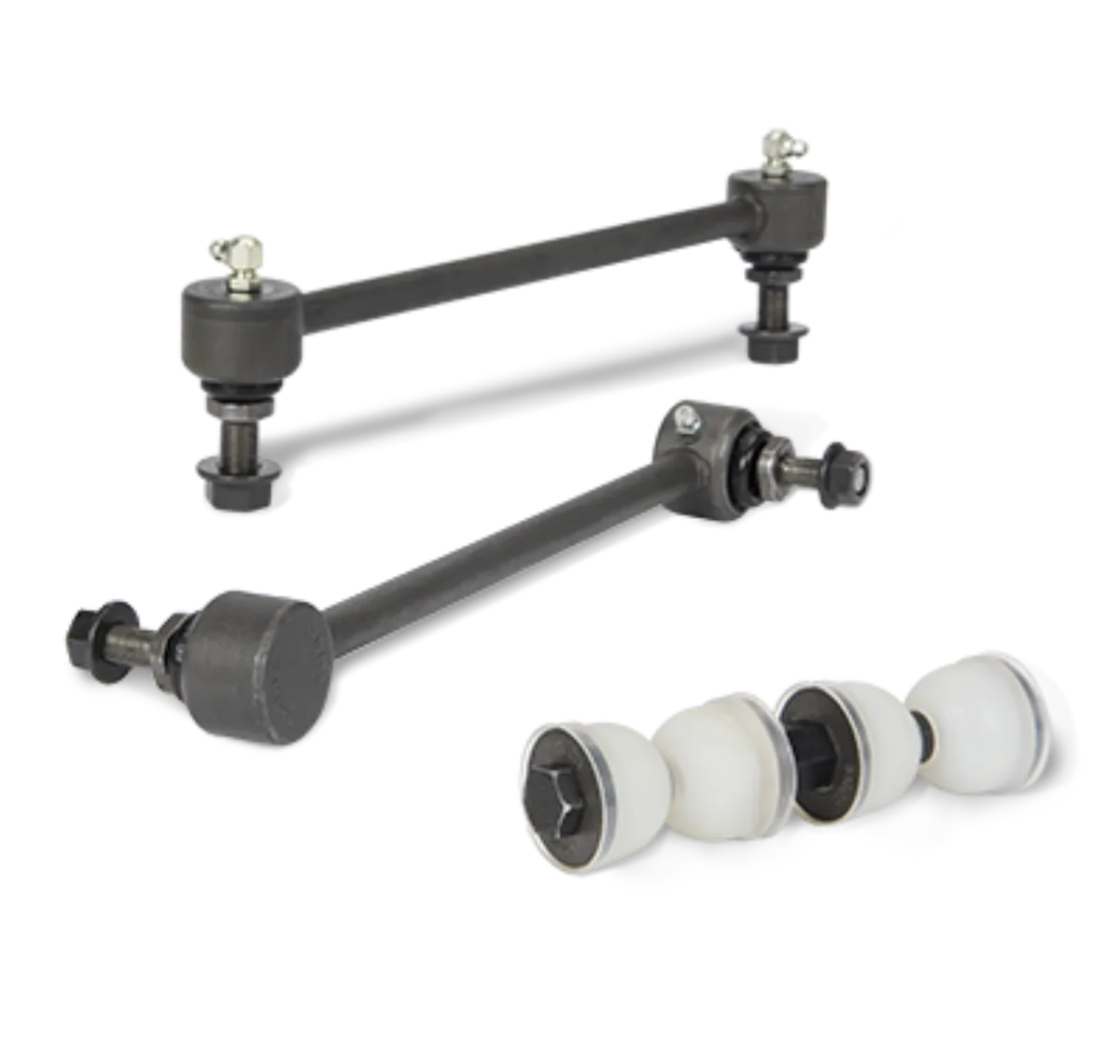
MOOG Front Stabilizer Link
One of the first parts worth checking when the CX-5 starts knocking over small bumps.
$44
View productNo matching results found.
Kreativ Auto
A CX-5 front-end clunk over smaller bumps usually points to stabilizer or hardware wear before it points to the expensive stuff.
Last updated April 16, 2026
Start with inspect the front sway bar links and nearby hardware before you chase the bigger suspension parts..
Quick verdict
A CX-5 front clunk over small bumps is usually a smaller stabilizer or hardware issue before it is a full front-strut story.
First thing to check
Inspect the front sway bar links and nearby hardware before you chase the bigger suspension parts.
Can you drive it?
Usually yes in the short term, but repeated front-end clunks should be inspected before wear spreads.
Typical cost range
$0 to $500 depending on whether the fix is hardware, links, or a larger front-suspension repair.
DIY difficulty
Easy to moderate for inspection, moderate for replacing links or related wear parts.
Often confused with
Stop driving if
Look for the details that separate front-end clunk over bumps on mazda cx-5 2020 from nearby complaints.
Worn front sway bar links or bushings. is the first cause to rule out before moving deeper.
Work through these fixes only after the checks match front-end clunk over bumps on mazda cx-5 2020.
Escalate front-end clunk over bumps on mazda cx-5 2020 when the symptom points beyond a simple inspection.
Avoid these shortcuts when chasing front-end clunk over bumps on mazda cx-5 2020.
These parts make sense only if the checks for front-end clunk over bumps on mazda cx-5 2020 point here.
One of the first parts worth checking when the CX-5 starts knocking over small bumps.
$44
View productOpen the matching vehicle pages when front-end clunk over bumps on mazda cx-5 2020 needs model-year context.
These parts guides are useful once front-end clunk over bumps on mazda cx-5 2020 has a confirmed repair area.
That is when uneven bump movement makes small stabilizer and bushing play easier to hear.
No. Smaller stabilizer and bushing parts are often the cleaner first answer.