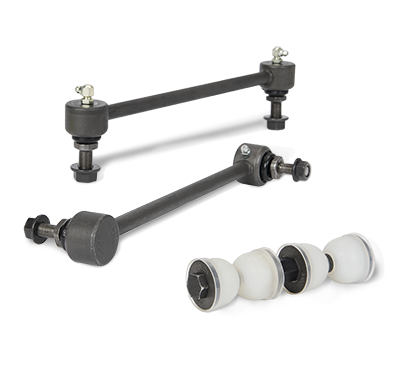
MOOG Front Stabilizer Link
One of the first parts worth checking when the front end knocks over driveway entries and small uneven bumps.
$39
View productKreativ Auto
Use this guide to figure out what the symptom usually means, how urgent it is, and what to check before buying parts or booking the repair.
Editorial review
These problem guides are written to help drivers identify the most likely cause, make a sensible first check, and avoid wasting money on the wrong repair.
This is the short version if you want to decide how serious the problem is before digging deeper.
Repair urgency
Low to medium unless the clunk is getting louder or steering feel has changed
Can you drive it?
Usually yes in the short term, but repeated front-end clunks should be inspected before wear spreads
Estimated cost
$0 to $500 depending on whether the fix is hardware, links, or a larger front-suspension repair
DIY difficulty
Easy to moderate for inspection, moderate for replacing links or related wear parts
Use this section if you want the shortest path from symptom to the first sensible check.
Quick verdict
A driveway-entry clunk is usually a smaller front stabilizer or bushing problem before it is a full strut story.
First thing to check
Reproduce the noise at low speed and inspect the front sway bar links and nearby hardware before chasing bigger suspension parts.
Often confused with
Stop driving if
These are the signs drivers usually notice before the real cause is confirmed.
Start with the common causes first so diagnosis stays efficient and the wrong parts do not get ordered too early.
Work through these in order so you can confirm the problem before spending money on parts.
These are the signs that the problem is moving past a basic driveway diagnosis.
These are the errors that usually waste time, money, or both.
Before you order parts or assume the diagnosis is universal, check the trim, phase, and powertrain notes below.
These are the parts most likely to matter once the diagnosis is pointing in the right direction.
One of the first parts worth checking when the front end knocks over driveway entries and small uneven bumps.
$39
View productThese vehicle pages give you more context if the same symptom shows up on a specific model.
Car hub
What to watch on a 2020 Toyota RAV4 if you want to stay ahead of brake noise, humming hubs, and the small issues that make an SUV feel older than it is.
Car hub
The 2021 Toyota RAV4 issues and maintenance points that matter most if you want to keep the car quiet, smooth, and easy to live with.
If you already know the likely repair area, these guides can help you compare the next parts to look at.
Front Sway Bar Links
The right Civic front sway bar links are the ones that quiet the small-bump rattle without turning a simple repair into another guess.
Front Sway Bar Links
The right front sway bar link is the one that solves the front-end knock without turning a small suspension repair into a parts roulette game.
Sway Bar Links
When a Tiguan starts clunking over bumps, sway bar links are often where the smart diagnosis starts.
That kind of entry loads the suspension unevenly, which makes link, bushing, and mount play easier to hear.
No. Smaller stabilizer and bushing parts are often the cleaner first answer.