
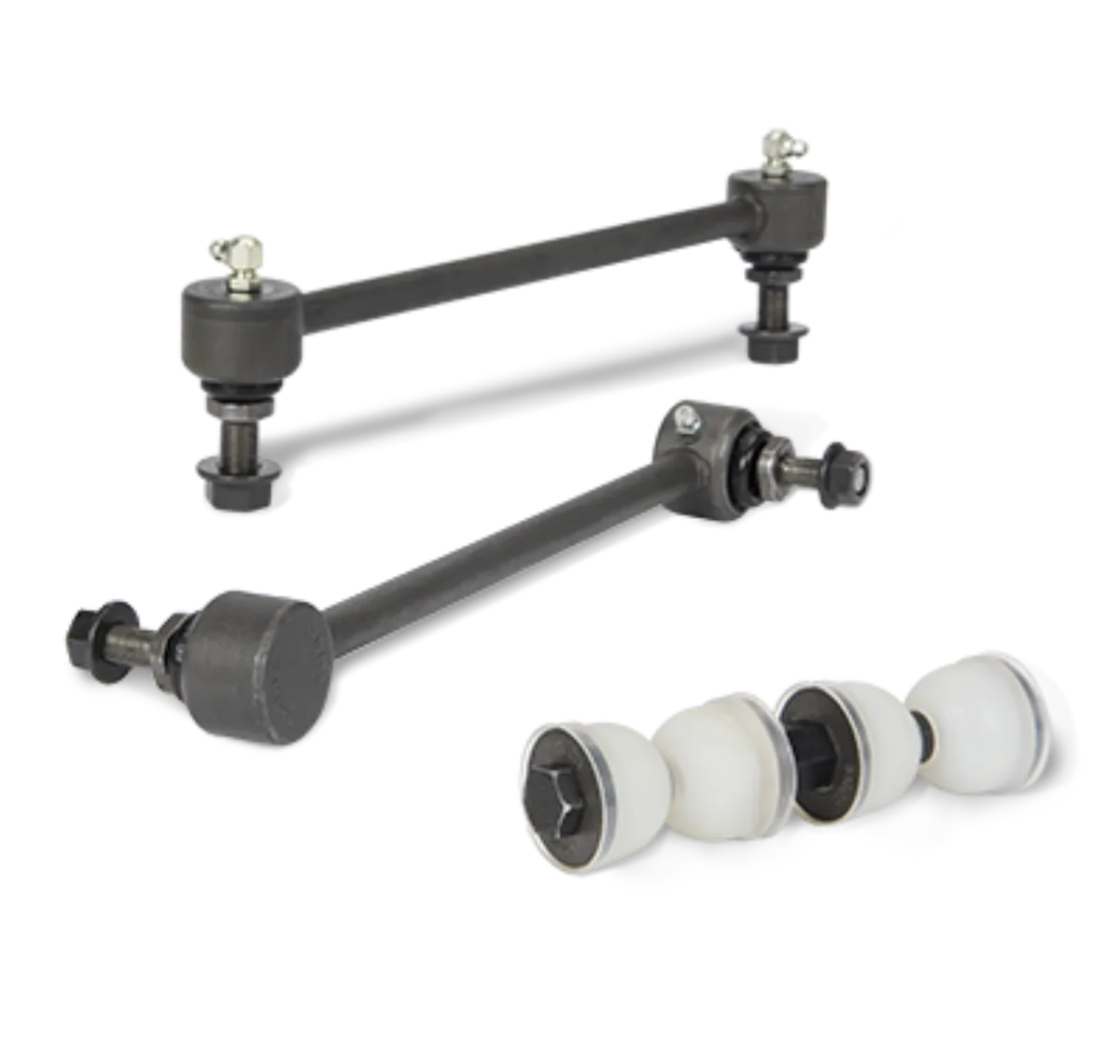
MOOG Front Stabilizer Link
Best overall choice if you want a straightforward repair for the classic front-end clunk.
Check current retailer price
View productNo matching results found.
Kreativ Auto
The right CR-V front sway bar link is the one that solves the clunk cleanly without turning a small suspension repair into a repeat job.
Last updated April 16, 2026
Fitment and source material come before price. Retailer prices stay hidden until a dated verification is recorded.
Price status
No current product-level price source is recorded. Check the retailer directly before treating a listed product as a budget estimate.
Selection criteria
Alternatives
Start with the Honda CR-V 2020 use case and the front sway bar links problem you are trying to solve.
Quick verdict
A CR-V front-link repair should make the small-bump clunk go away cleanly, not just move the noise around.
Best overall
Best all-around choice for a clear small-bump front-end clunk repair.
Best value
Good daily-driver option if you want a clean repair without overspending.
Best OE-style
The safest conservative fitment route if you want the most OEM-like parts path.
Best for
Do not buy this route if
Confirm the symptom, the trim, and the part family before ordering front sway bar links for Honda CR-V 2020.
Confirm the symptom
If the car still has an unclear symptom, open Front-end clunk over bumps on Honda CR-V 2020 before treating this front sway bar links shortlist as the fix.
Check exact fitment
Match the vehicle year, trim, engine, and generation notes before choosing between the options for Honda CR-V 2020.
Choose for the job
MOOG Front Stabilizer Link is the first shortlist option, but the right pick still depends on driving style, budget, and how long you plan to keep the car.
Compare the main front sway bar links tradeoffs before reading each product note.
| Product | Price status | Rating | Why it stands out | Link |
|---|---|---|---|---|
| MOOG Front Stabilizer Link | Check current retailer price | 4.6 / 5 | Best overall choice if you want a straightforward repair for the classic front-end clunk. | View product |
| Delphi Front Stabilizer Link | Check current retailer price | 4.5 / 5 | Good value option for daily-driven CR-Vs that need a clean, simple front-link refresh. | View product |
| Genuine Honda Front Stabilizer Link | Check current retailer price | 4.8 / 5 | Safest OE-style pick if you want the most conservative fitment route. | View product |
Each option below is framed around where it makes sense on Honda CR-V 2020.
Best overall choice if you want a straightforward repair for the classic front-end clunk.
Check current retailer price
View product Good value option for daily-driven CR-Vs that need a clean, simple front-link refresh.
Check current retailer price
View product Safest OE-style pick if you want the most conservative fitment route.
Check current retailer price
View productThe right front sway bar links depends on how Honda CR-V 2020 is driven, how much refinement matters, and how much compromise is acceptable.
Open these vehicle pages if the front sway bar links choice depends on year, trim, or platform details.
Use these diagnostics if the symptom is not clearly solved by front sway bar links yet.
Problem guide
A CR-V front-end clunk over small bumps usually points to smaller stabilizer or hardware wear before it turns into a full strut story.
Problem guide
A CX-5 front-end clunk over smaller bumps usually points to stabilizer or hardware wear before it points to the expensive stuff.
Problem guide
A front-end clunk on driveway entries usually points to small suspension movement, which is why links and bushings deserve attention before the expensive parts do.
Yes. They are one of the first parts worth checking when the noise is tied to small uneven suspension movement.
Often yes. If one side has enough wear to clunk, the other side is usually not far behind.