
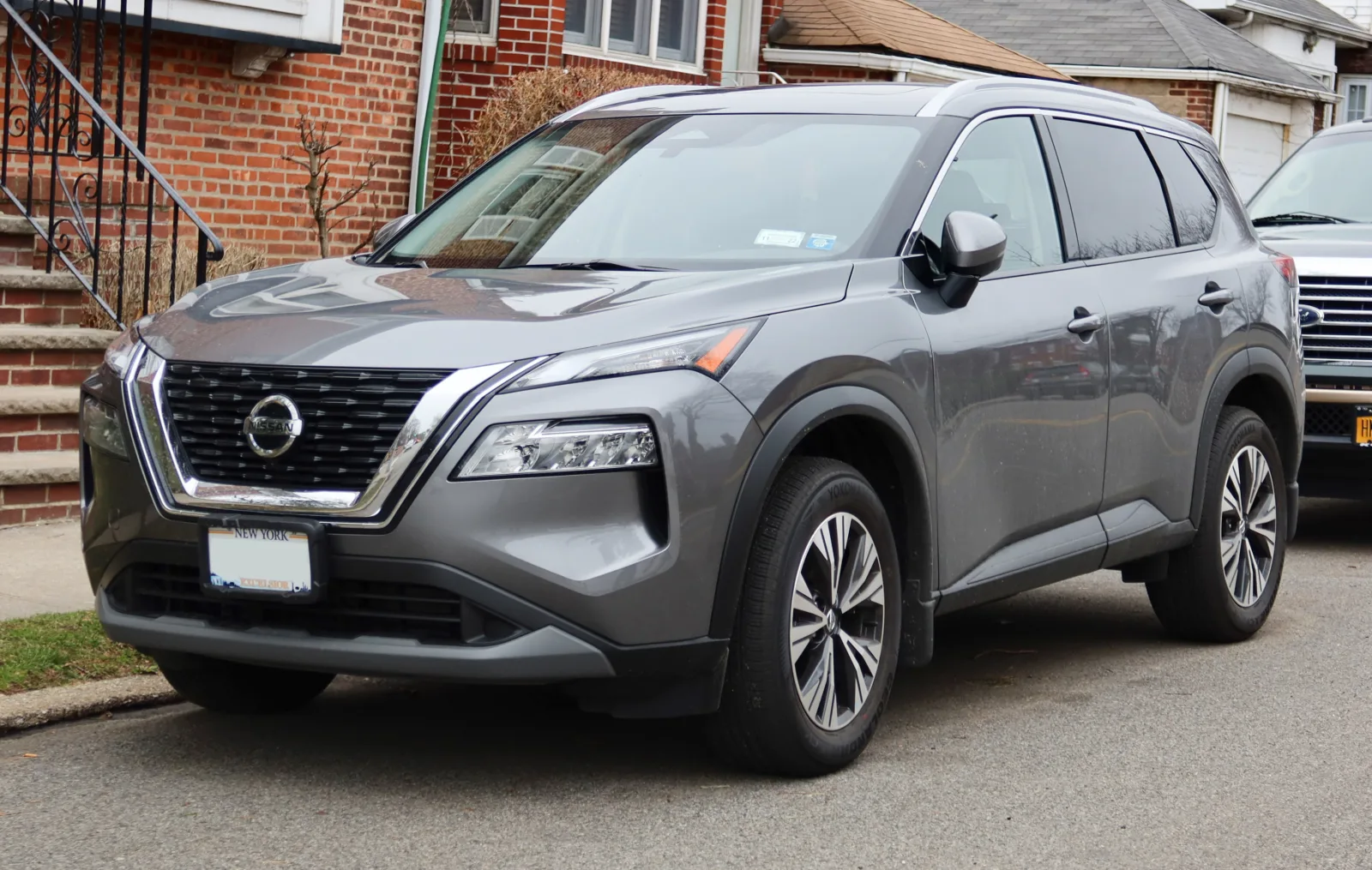
Nissan Rogue
Better if the newer platform feels worth the price
The 2021 Rogue can feel fresher inside and on the road, but battery reserve, brake squeal, tire condition, and CVT records need to support the higher confidence.
No matching results found.
Kreativ Auto
The Rogue and Tucson are sensible used compact SUVs when the example is clean, but both can hide small first-year costs in plain sight. Battery reserve, brake noise, tire wear, and service records matter more than a small monthly payment difference.
Editorial review
Used Nissan Rogue and Hyundai Tucson comparison focused on practical first-year ownership costs.
Start with the buying answer, then check the sections below for the details that change the decision.
The Rogue often feels newer; the Tucson often makes the stronger value case.
Nissan Rogue
The 2021 Rogue can feel fresher inside and on the road, but battery reserve, brake squeal, tire condition, and CVT records need to support the higher confidence.
Hyundai Tucson
The 2020 Tucson can be a smart buy when it is clean, simple, and cheaper to reset. Brake noise, weak starts, and tire wear still need to be checked.
The first-year budget should be built before the model choice is final.
The better SUV depends on how much refinement, room, and price matter in the same week.
Keep the inspection focused on ordinary costs first.
Buy the one with the clearer first-year budget.
Choose the Rogue when the newer feel is backed by clean records and no immediate battery, brake, tire, or CVT questions. That is when the higher confidence makes sense.
Choose the Tucson when it is priced well and the first service reset is obvious, limited, and affordable. Value disappears quickly when small jobs stack up before the first oil change.
Move into the matching ownership page once one vehicle is the stronger candidate.
The Rogue can feel newer and more polished. The Tucson can be the stronger value. The better used choice is the one with fewer immediate battery, brake, tire, and service questions.
The Tucson may be cheaper to buy, but first-year costs decide the real answer. A Rogue with clean records can beat a cheaper Tucson that needs tires, brakes, and a battery.
Check battery reserve, brake noise, tire wear, road hum, oil records, and CVT or fluid service evidence.